Activating the Faith of God
Activating the Faith of God
Living by the Faith God Has Already Given You
Text: Mark 11:12–14; Mark 11:20–24
One of the greatest misunderstandings among Christians is the belief that faith is something we are continually trying to obtain from God. Many believers spend years praying for more faith, hoping one day they will possess enough confidence to see God move in powerful ways. While there is certainly nothing wrong with asking God to strengthen us, the New Testament reveals a remarkable truth that often goes unnoticed. Through Jesus Christ, God has already placed within every believer everything necessary to live a victorious life of faith. The issue is rarely that we need more faith; rather, we need a greater revelation of the faith we have already received through our union with Christ. Faith is not something we manufacture through emotion or positive thinking. It is the result of knowing God, believing His Word, and allowing the Holy Spirit to renew our minds until we begin living from the reality of who now lives within us.
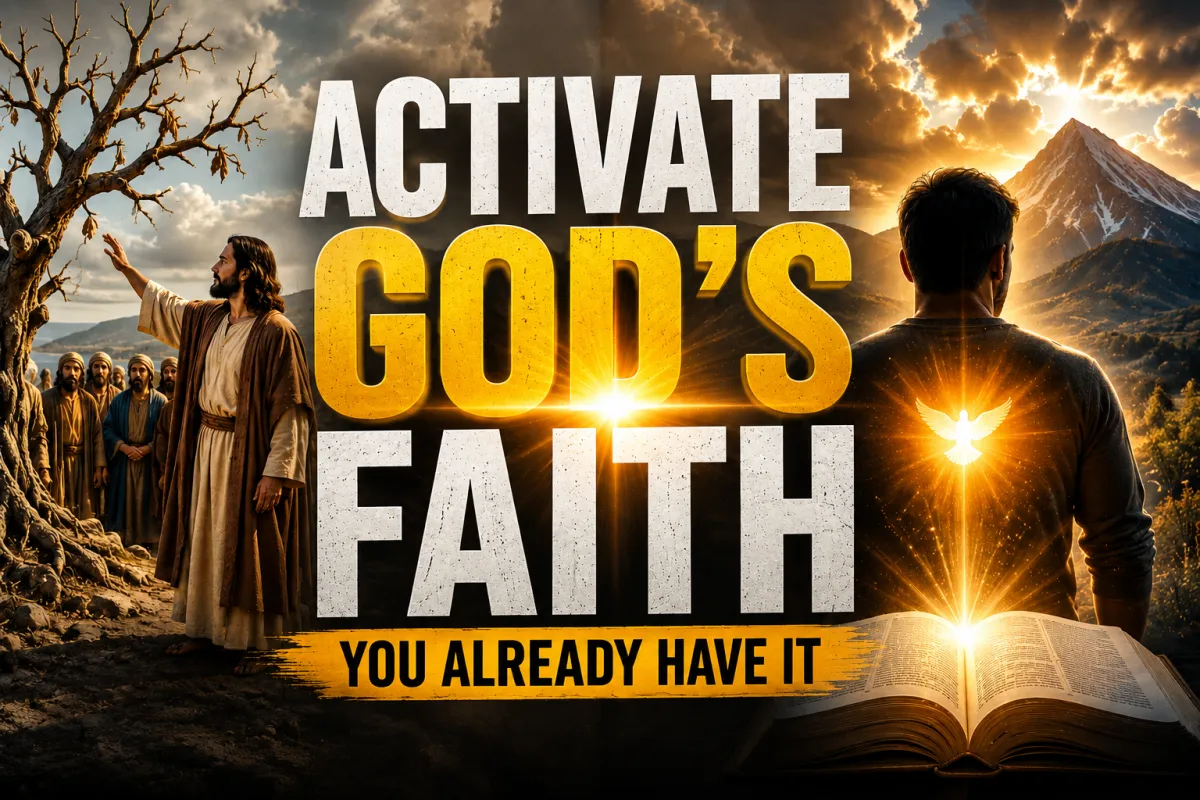
Jesus illustrated this truth in Mark 11 after speaking to the barren fig tree. The next morning the disciples were amazed to discover that the tree had withered from its roots. Instead of simply explaining the miracle, Jesus used the moment to teach one of the greatest lessons on faith recorded in Scripture. He instructed His disciples to "have faith in God," pointing them toward a lifestyle of trusting and operating from God's faithfulness rather than relying upon their own natural ability. Jesus wanted His followers to understand that the Kingdom of God operates differently from the world. God's people are not limited by what they see, feel, or experience. They are called to live by faith, believing God's Word even before circumstances change. Throughout Scripture we discover three important principles that activate the faith God has already placed within us: we must receive, renew, and release.
Receive: The Foundation of Faith
Everything begins with receiving Jesus Christ. John declares, "The Word became flesh and dwelt among us... and of His fullness we have all received" (John 1:14,16). Jesus was not merely a teacher bringing information from heaven. He was heaven walking among mankind. Wherever He traveled, the Kingdom of God became visible. The blind received sight, the lame walked, demons fled, the broken were restored, and sinners found forgiveness because the fullness of God was present in Christ. Yet although Jesus openly ministered throughout Galilee, Judea, and Samaria, not everyone received what He offered. His power was available to all, but only those who recognized who He was received what He carried. Faith became the doorway through which God's grace flowed into people's lives.
The contrast throughout the Gospels is striking. In His hometown of Nazareth, Jesus could perform only a few miracles because of the people's unbelief (Mark 6:5-6). They were too familiar with Him to recognize His divine identity. They saw the carpenter's son instead of the Son of God. Yet elsewhere people approached Him with expectant faith. Blind Bartimaeus refused to be silenced and received his sight. The woman with the issue of blood pressed through the crowd believing that one touch of His garment would change her life forever. Zacchaeus climbed a tree simply hoping to see Jesus and instead found salvation. Lazarus walked out of a tomb after hearing Christ's voice. Mary Magdalene experienced complete deliverance from demonic oppression, and ordinary fishermen abandoned their nets because they recognized that following Jesus was worth more than every earthly possession. The difference was never Jesus' willingness to move. The difference was whether people believed enough to receive what He offered.
That same principle applies to believers today. When Jesus breathed upon His disciples after the resurrection and declared, "Receive the Holy Spirit" (John 20:22), He was introducing an entirely new reality. God would no longer simply dwell with His people; He would dwell within them. John reminds us that we have received "His fullness," not merely a portion of His presence or an occasional visitation of His power. The Holy Spirit now lives within every born-again believer. Romans 12:3 further teaches that God has dealt to every believer "the measure of faith." Scripture never suggests that some Christians receive faith while others do not. Instead, every believer receives what is necessary to walk with God. The challenge is not the amount of faith we possess but whether we recognize and activate the faith already entrusted to us. The just are called to live by faith every day, not merely during moments of crisis.
Unfortunately, many believers remain spiritually unaware of the treasure they carry. Jesus declared in John 14:20, "At that day you will know that I am in My Father, and you in Me, and I in you." Those few words completely redefine the Christian life. Christ Himself lives within His people through the Holy Spirit. Because God lives in us, His resources, His power, and His faith are available to us. Too often Christians spend their lives asking God for something He has already deposited within them. Hebrews 11:1 begins with the words, "Now faith is," reminding us that faith is a present reality rather than a future possibility. Instead of continually praying for more faith, believers should spend time discovering the incredible inheritance they have already received through Christ.
Renew: Renewing the Mind to the Reality of Faith
Although every believer receives new life at salvation, our thinking does not automatically change overnight. We may possess a renewed spirit while still carrying old patterns of thought that limit our ability to walk in faith. This is why Paul exhorts believers in Ephesians 4:22-24 to put off the old man, be renewed in the spirit of their minds, and put on the new man created according to God in righteousness and true holiness. Salvation changes our identity instantly, but transformation takes place as our minds are continually renewed by the Word of God. We gradually begin seeing ourselves as God sees us rather than as our past experiences have defined us.
This renewal grows through intimacy with God. Jesus declared in John 15:4-5, "Abide in Me, and I in you." Christianity was never intended to be limited to attending church services or agreeing with biblical doctrine. It is an invitation into daily fellowship with the living Christ. As we spend time in prayer, meditate upon His Word, worship His presence, and learn to hear the voice of the Holy Spirit, we become increasingly aware of who we are in Him. Our confidence shifts away from ourselves and rests upon His sufficiency. The story of the ten lepers beautifully illustrates this truth. All ten experienced miraculous healing, yet only one returned to worship Jesus. All ten received a blessing, but only one pursued intimacy. There is a tremendous difference between experiencing God's power and developing a personal relationship with the One who performs miracles.
The Scriptures continually remind us that God knows us intimately. Psalm 139 declares that He formed us in our mother's womb, ordained every one of our days, and knows every detail about our lives. Even the hairs on our heads are numbered. Such truths renew our thinking because they remind us that we are not accidents wandering through life. We were created intentionally by a loving Father who designed us with purpose. As that revelation settles into our hearts, fear begins to lose its grip and faith grows stronger because we recognize that the God who created us also sustains us.
Romans 12:1-2 further reveals the process of transformation. Paul first urges believers to present themselves as living sacrifices, surrendering every area of life to God. He then commands them not to be conformed to this world but to be transformed through the renewing of their minds. As our thinking changes, our lives begin proving God's good, acceptable, and perfect will. Faith becomes more than intellectual agreement; it becomes the practical way we live. Romans 10:17 explains that faith comes by hearing and hearing by the Word of God. Every time we read Scripture with an open heart, the Holy Spirit reveals more of Christ to us. Knowledge becomes revelation, revelation produces confidence, and confidence leads to obedient action.
Acts chapter 3 provides a powerful illustration of renewed thinking. Peter and John encountered a man lame from birth begging outside the temple gate. Peter looked at him and boldly declared, "Silver and gold I do not have, but what I do have I give you. In the name of Jesus Christ of Nazareth, rise up and walk." Peter was no longer focused on what he lacked. Years of walking with Jesus, receiving revelation from the Holy Spirit, and allowing God's Word to renew his mind had convinced him that he possessed something far greater than earthly wealth. He understood the authority and power available through Christ, and he acted upon that revelation. Faith always responds to what God has revealed.
Release: Releasing the Faith God Has Given You
Faith is never intended to remain hidden within the believer. It is designed to be released. Jesus declared in Mark 11:23 that whoever speaks to the mountain and believes without doubting in his heart will see impossible things become possible. Jesus did not instruct His disciples to ignore mountains or simply learn to live with them. He taught them to confront obstacles with faith-filled obedience. Kingdom citizens operate differently because they trust God's promises more than visible circumstances. They are governed by the reality of heaven rather than the limitations of earth.
Jesus instructed His followers in Matthew 6:33 to seek first the Kingdom of God and His righteousness. When God's Kingdom becomes our highest priority, everything else finds its proper place. The Kingdom of God is already within every believer through the indwelling Holy Spirit. The same Spirit who raised Jesus from the dead now lives within us. Greater is He who is in us than anything we face in this world. Therefore, our confidence rests not in our own strength but in God's presence working through us. Faith becomes the normal atmosphere in which believers live instead of something reserved for emergencies.
Hebrews 11:6 reminds us that without faith it is impossible to please God because faith expresses confident trust in His character. Throughout the Gospels Jesus repeatedly commended those who believed Him despite impossible circumstances. The Roman centurion understood authority so clearly that he believed Jesus only needed to speak a word for healing to occur. The Syrophoenician woman refused to give up until her demon-oppressed daughter was delivered. Neither allowed obstacles to determine God's ability. Instead, they trusted His goodness above everything they saw. Their faith pleased the Lord because it honored His character.
Many believers unknowingly weaken their faith through the words they continually speak. They magnify problems, rehearse defeat, and agree with fear more often than they agree with God's promises. Yet Scripture teaches that faith speaks differently. Psalm 103:20 declares that God's angels excel in strength, doing His Word and heeding the voice of His Word. Hebrews 1:14 describes angels as ministering spirits sent to serve those who inherit salvation. While we never worship angels or place our confidence in them, Scripture clearly teaches that God has established an unseen Kingdom that actively works on behalf of His people. As believers speak God's Word under the leadership of the Holy Spirit, they align themselves with heaven's purposes. Just as military aircraft establish air superiority before troops advance on the battlefield, believers establish spiritual authority through prayer, worship, and faith-filled declarations rooted in God's Word. Victory begins long before circumstances visibly change.
Conclusion
God has not called His children to struggle through life wondering whether they possess enough faith to overcome the challenges before them. Through Jesus Christ He has already given us His Spirit, His promises, His Word, and the measure of faith necessary to fulfill His will. Our responsibility is to receive what He has provided, continually renew our minds through intimacy with His Word and presence, and boldly release that faith in obedient action. As we grow in our understanding of who lives within us, we stop living as spiritual beggars and begin walking as sons and daughters of the King. The same Jesus who healed the sick, calmed storms, cast out demons, and raised the dead now lives within His people through the Holy Spirit. As we learn to activate the faith He has already placed within us, we will see mountains move, lives transformed, and the Kingdom of God revealed through ordinary believers who have learned to trust an extraordinary Savior.
Love Pastor Steve
